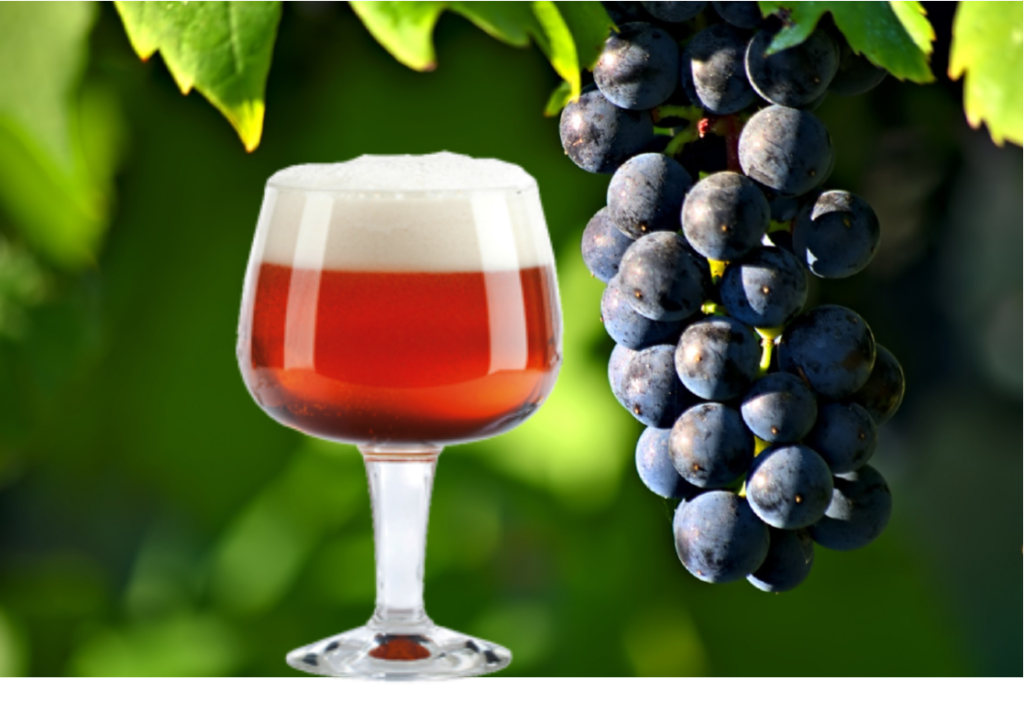
IGA stands for Italian Grape Ale. The BJCP which is the organization born in the USA that classifies and describes brewer styles says:
Italian Styles
X3. Italian Grape Ale
Suggested style placement: Category 29 (Fruit Beer)
Overall Impression: A sometimes refreshing, sometimes more complex Italian ale characterized by different varieties of grapes.
Aroma: Aromatic characteristics of a particular grape have to be noticeable but do should not overpower the other aromas. The grape/wine character should be pleasant and should not have defects such as oxidation. Malt character is usually restrained while hop aroma can range from medium-low to absent. Some examples can have a low to moderately low wild character described as barnyard, earthy, goaty but should not be as intense as in a lambic/fruit lambic. No diacetyl.
Appearance: Color can range from gold to dark brown. Reddish/ruby color is usually due to the use of red grape varieties. White to reddish head with generally a medium low retention. Clarity is generally good but can be affected by the use of grape.
Flavor: Many interpretations are possible. As with aroma, grape character (must or winey like) must be present but may range from subtle to medium intensity. Varieties of grape can contribute differently on the flavor profile: in general stone/tropical fruit flavors (peach, apricot, pineapple) can come from white grapes and red fruit flavors (e.g., cherry, strawberry) from red grape varieties. Further fruity character of fermentative origin is also common. Different kinds of special malts can be used but should be supportive and balanced, not so prominent as to overshadow the base beer. Roasted and/or strong chocolate character is inappropriate. Some sour notes are common and may help to improve the drinkability but should not be prominent as in Flemish ale/Lambic. Oak flavors, along with some barnyard, earthy, goaty notes, coming from aging in barrels can be present but should not be predominant. Bitterness and hop flavors are generally low. Diacetyl from very low to none.
Mouthfeel: Medium-high carbonation improves the perception of aroma. Body is generally from low to medium and some acidity can contribute to increased perception of dryness. Strong examples can show some warming but without being hot or solventy.
History: Produced by many Italian craft breweries during the last years, it represents a communion between beer and wine promoted to the large local availability of different varieties of grapes across the country. They can be an expression of territory, biodiversity and creativity of the brewer. Normally seen as speciality beer in the range of products of the brewery.
Ingredients: Pils or pale base malt with some adjuncts (if any) or special malts. Grape content can represent up 40% of whole grist. Grape or grape must (sometimes extensively boiled before use) can be used at different stages: boil, primary/secondary fermentation, or aging. Ale or wine yeast can show a neutral character (more common) or a fruity profile (English and Belgian strains). A wide range of hop varieties can be used in low quantities in order not to excessively characterize the beer.
Vital Statistics: OG: 1.043 – 1.090
IBUs: 10 – 30 FG: 1.007 – 1.015
SRM: 5 – 30 ABV: 4.8 – 10%
Commercial Examples: Montegioco Tibir, Montegioco Open Mind, Birranova Moscata, LoverBeer BeerBera, Loverbeer D’uvaBeer, Birra del Borgo Equilibrista, Barley BB10, Barley BBevò, Cudera, Pasturana Filare!, Gedeone PerBacco! Toccalmatto Jadis, Rocca dei Conti Tarì Giacchè.
It is therefore a brewer style that is now recognized worldwide as the only Italian style.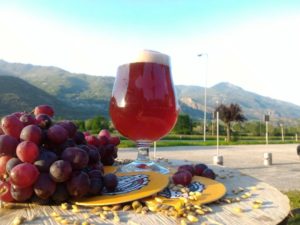
By putting together ingredients such as grapes (From O.I.V. data, Italy is the world’s largest producer of wine), beer (for some decades craft beer in Italy has been on the rise) and the good healthy old Italian flair, this product was born, non-existent until a few years ago. The birth of IGAs was also favored by the lack of a strong brewing tradition which, in some countries, almost becomes a brake on innovation (see the law of purity in Germany).
The technical condition for this style is the use of up to 40% calculated as quantity of grape extract or its derivative.
The most used methods are:
- Fresh or dried grapes, normally infused in hot or cold must
- Fresh must: freshly pressed grapes in the presence or absence of skins normally added to beer must and fermented together. The problem with grapes and fresh must is that the use is limited only during the harvest period, unless they are kept frozen with a huge expenditure of energy.
- Concentrated must: red or white grape must from which water is subtracted by vacuum distillation, pushed cold or with reverse osmosis. It becomes a stable product due to the high sugar concentration and therefore it is always available.
- Rectified concentrated must: concentrated must filtered with vegetable carbon then stripped of all organoleptic characteristics. The liquid grape sugar therefore remains. In Italy it is the only lawful addition in winemaking to increase the sugar content. It can also be used for an IGA, but it does not add anything other than sugar.
- Muted must: grape must made stable with the addition of sulfur dioxide or alcohol. In the first case, extreme care must be taken in its use since SO2 is an allergen with a legal limit of 10mg/l, above which the wording “contains sulphites” on the label is mandatory. Even the must mutated with alcohol, although technologically interesting, can give problems at the custom agency level and a thorny issue of adding alcohol in an excise product.
- Microfiltered must: there are some aromatic musts destined to become sweet wines (Muscat, malvasia, brachetto), which are microfiltered and refrigerated immediately after crushing and pressing without making the fermentation start. The must is thus preserved even for long periods and then partially fermented as needed. This must is therefore easily available almost all year round, it is stable, does not involve technical problems and, therefore, is also widely used by IGA producers.
- Cooked or Sapa must: must concentrated on fire used in some fortified wines (in some Marsala) and in the production of balsamic vinegar. This must is stable given the high sugar content and brings characteristic flavors of caramelized sugar.
- Fermented pomace: after racking off the spent grape skins, beer must can be added. Fermentation can be spontaneous, triggered by the yeasts of the skins.
The marriage between malt and grape products can take place:
- In the cooking room: grapes or grape must in one of the previously described forms are added in boiling or whirlpool. In this way, there will be a sterilization of the added ingredient, but also a modification; the characteristics transferred when hot are different from when cold.
- Before fermentation: the 2 musts are joined in the fermenter after the beer must has been refrigerated. The yeasts added or spontaneously brought from the grapes ferment everything. It is a widely used method
- During maturation or aging even in wood
- On finished products: it becomes a real cut between beer and wine. This method is not allowed for some interpretations of law.
The IGA product is often controversial from a legal and bureaucratic point of view. Italians are famous for being artists, whimsical and imaginative, so much that they’re capable of complicating life with twisted legislation and bureaucracy.
In theory, according to law 1354/62, if the addition of grape must is less than 40% as an extract of the total, it can be called beer. However, the same legislation limits the commercial name of beer: “1. The name «beer» is reserved for the product obtained by alcoholic fermentation with strains of saccharomyces carlsbergensis or saccharomyces cerevisiae of a must prepared with malt, also roasted barley or wheat or their mixtures and water, bitter with hops and its derivatives or with both.”; often in IGAs, especially those matured in wood, other yeasts (added or spontaneously developed) such as Brettanomyces take over. At this point the product could no longer be called beer but a “fermented barley drink”.
There is therefore no single interpretation of the law, unfortunately not even by control bodies.
The first to have produced and marketed an IGA is the Sardinian Barley brewery in 2006 (the BB10), the master brewer Nicola Perra is rightly attributed the authorship of this style.
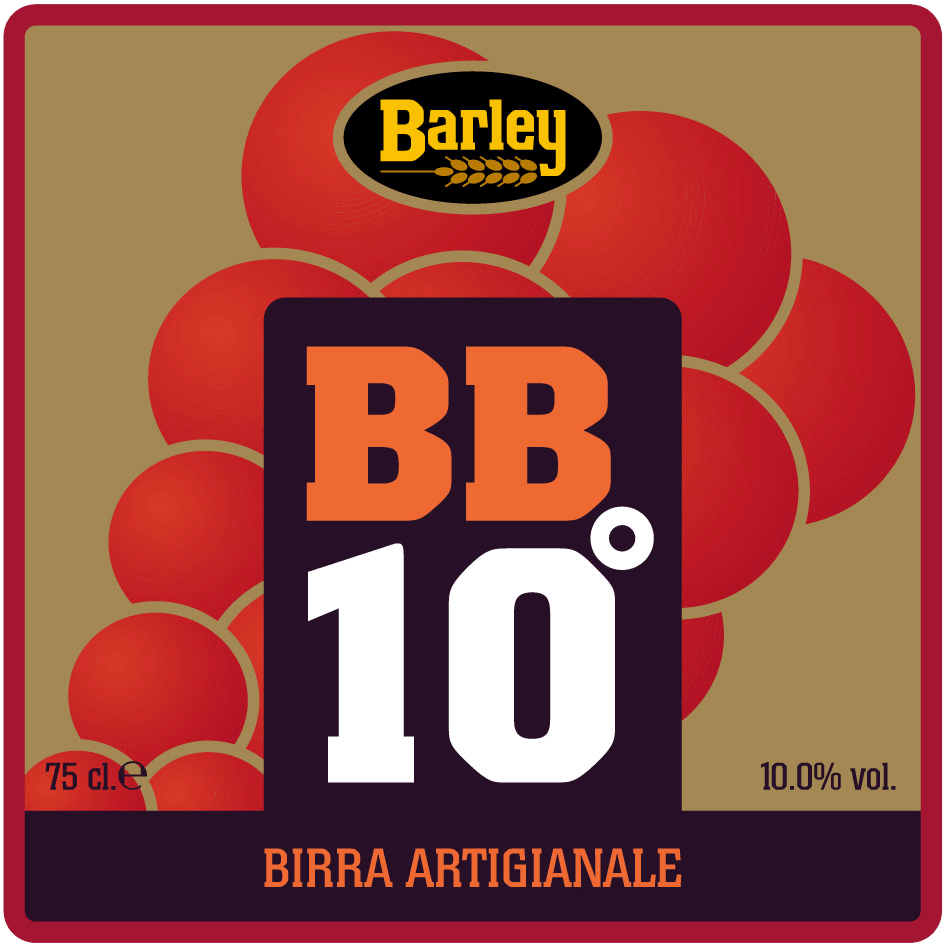
I will mention some breweries that have distinguished themselves with their IGAs: Montegioco (brewery famous for its beers with added fruit, produces 2 IGAs with Timorasso and Croatina musts), Loverbeer (its Beerbera with Barbera must is famous), Sagrin (recent brewery in the heart of the Langhe heavily imprinted on IGAs, remarkable is their Roè with arnesis must). These are obviously just a few mentions that don’t want to take anything away from the countless good IGA manufacturers.


However, it can be said that the meeting between beer must and grapes is as old as the invention of beer itself. As discovered by the analyzes carried out on the residues of some jars found in Lombard quarters of northern Italy, grapes were added to the beer must which, thanks to its natural sweetness, attracts a flora of wild yeasts which were thus inoculated in the must to ferment it.
As authors of this article, we cite our personal experience in the study and development of the Soralamà IGAs.
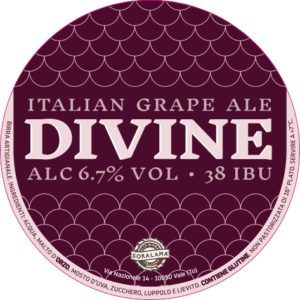 The Divine was born in collaboration with the prestigious Belgian brewery “Brasserie de Minne” (ex-Brasserie de Bastogne). This renowned brewery purchased the new production facility from Simatec (sister company of Soralamà, manufacturer of brewing systems). Combining the need to test the new plant with the healthy madness of the 2 brewers and the idea of creating an Italy-Belgium bond with a beer, this product was born. The beer base, acidified in mashing and decidedly hopped, before fermentation cold concentrated must of red grapes is added. The fermentation was carried out with ale yeast for American style beers, thus limiting the esters produced by possible contamination of wild yeasts.
Another interesting experiment currently underway was born with the collaboration of the renowned winery “Cantine Ascheri”. 2 winemakers: myself going to Beer and Giuliano Bedino, winemaker of Ascheri.
We started from the idea of giving prominence to the part of grape must that is often put in the background in the IGAs and in the “brewing” technique. 2 IGAs were obtained from the same freshly pressed must of Nebbiolo da Barolo grapes: one clear and one red. Tests of refermentation, refining and blending are still ongoing.
Lorenzo Turco (Soralamà Head Brewer)
Marco Boaro (Soralamà Brewer)
About Us

Alta Birra Italiana wants to be a portal of diffusion of the Italian beer culture, alternating contents about the history of the beer in Italy with actuality and evolution of the Italian beer movement.