
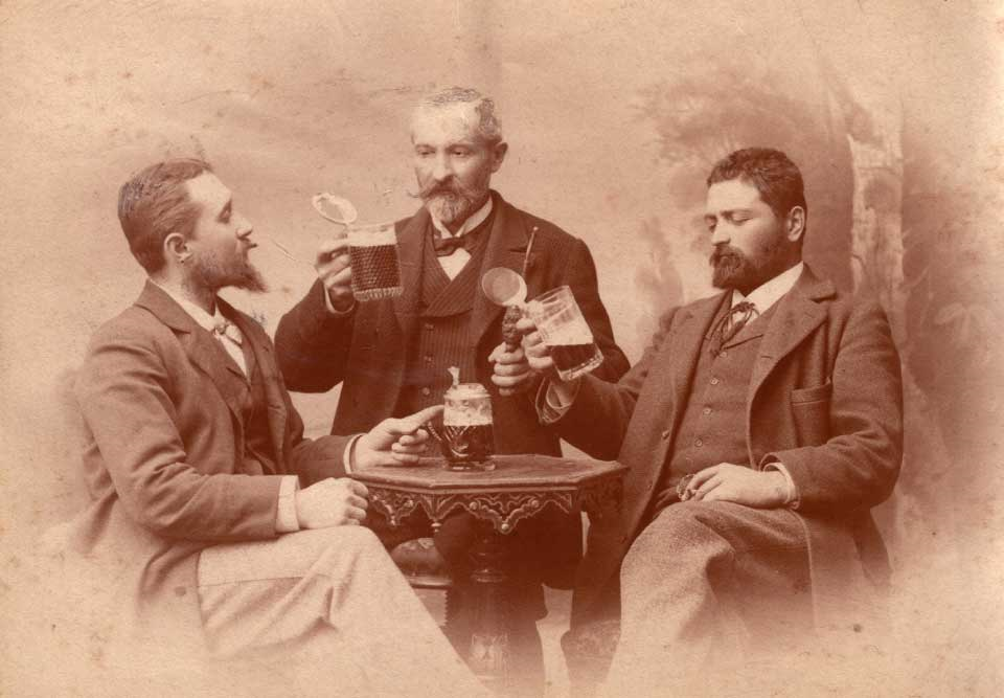
When the Germanic people began to use the hop as a preservative and, by means of the Hanseatic League, exported its use throughout Europe, the culture of beer spread throughout the “navigated” world, until it reached Italy where archaeology gives us information about the first traces of drinks similar to the current “beer, dark and high-grade”, in a Celtic tomb in Pombia, Piedmont, even dating back to 560 BC.
And perhaps also because of this ancient territorial link, in this territory, more generally in Piedmont, many centuries later, the first Italian breweries were born.
The relationship between the north-west of the peninsula and beer has been strong since the beginning. During the 19th century, beer was considered a luxury drink intended for the wealthier social classes and only in the 20th century did it become accessible to everyone.
Until then, the vast majority of beer consumed in our country came from nations with a great brewing tradition: France, Germany and England. But towards the middle of the 19th century, small breweries began to be established in Northern Italy too, favored by the industrial policy of the time.
They were entrepreneurs from beyond the Alps, convinced that they could meet a potentially flourishing market, to be promoters and at the same time pioneers of beer production in Italy, in the second half of the nineteenth century, in some areas of Lombardy and precisely in Piedmont.
The first Italian brewery, according to Ermes Zampollo, who published an article about it in the October 1984 issue of “Civiltà del bere”, would have been the Spluga, in Chiavenna, which started in 1840 and even earlier, at the end of the 1820s, in Brescia, the Austrian master brewer Franz Saverio Wührer had started a brewing activity.

It was thanks to the push of Spluga Beer, during the nineteenth century, in the same Val Chiavenna that other breweries were born, including the Ritter Brewery, the Silvera and C (later the Augustoni and C. Society), the G. Coray and C., the Hagen and C.
And at the beginning of the new century, more than 150 breweries could be counted on the national territory, with an estimated production of more than 150 thousand hectoliters, a trend that consolidated, reaching a peak at the end of the 1920s, with 1.5 million hectoliters produced in 1925.
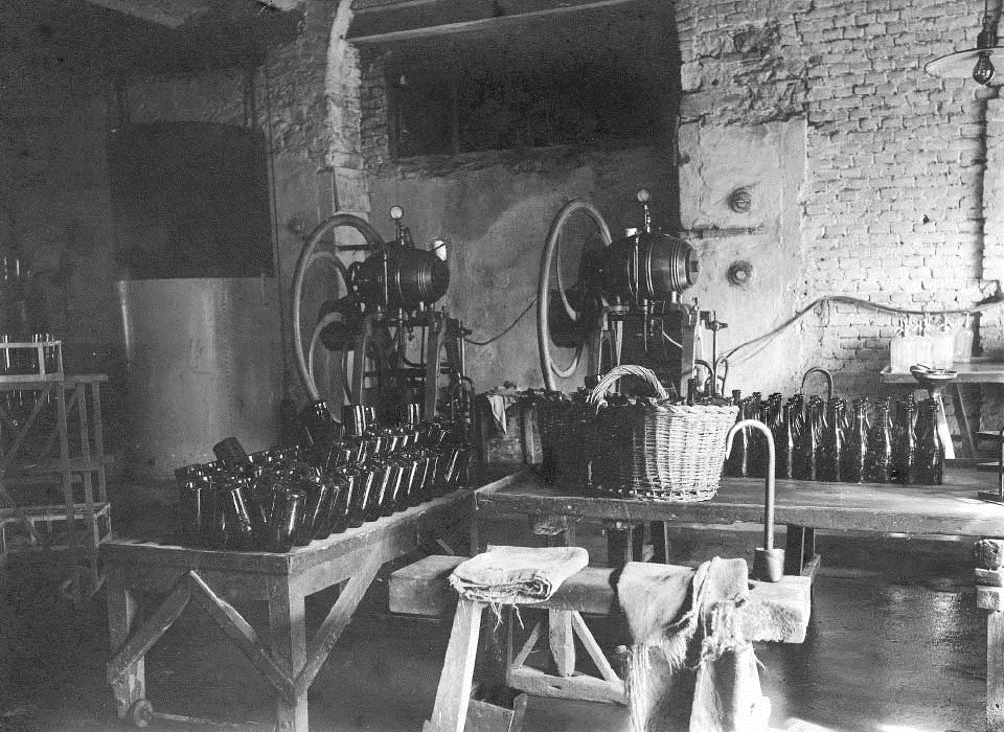
Turin was the city with the most fervent brewing activity, in particular in the area of Borgo San Donato, particularly suitable for the production of beer, thanks to the possibility of exploiting a variety of water described as “very pure, light, sweet and slightly susceptible to changes in temperature”, such as the one that flowed in the Turin Canal, a derivation of the Dora Riparia, later buried. The water in this canal was not only a fundamental raw material but also a low-cost source of energy.
In the Borgo, known for its tanneries and confectionery factories, in the second half of the nineteenth century, two of the most important and ancient breweries in Turin were founded: Bosio & Caratsch and Metzger, which went alongside the Boringhieri (a few hundred meters away).
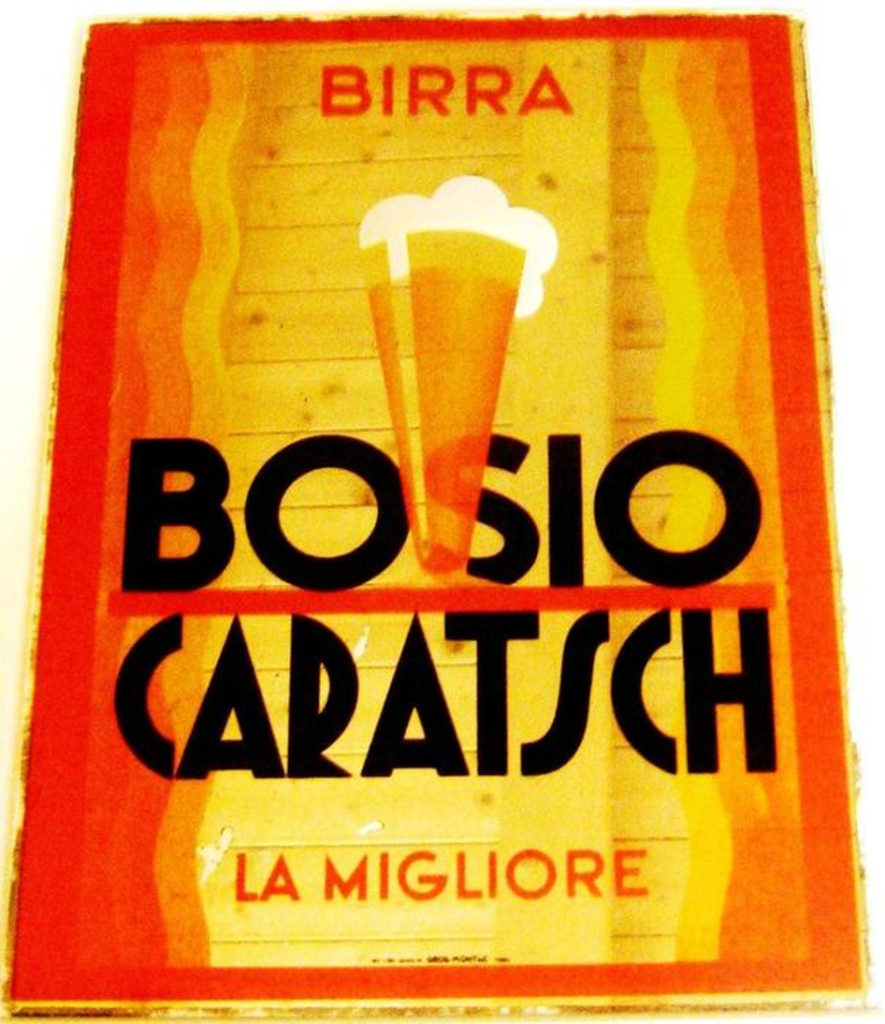
Following the motto “Bona cervisia laetificat cor hominum”, the Bosio & Caratsch brewery positioned itself on the market becoming a benchmark, while the slogan “he who drinks beer lives a hundred years” had become Metzger’s mantra, to which we owe the merit of a real innovation, the introduction of two new types of beer that were yet unknown in Italy: pilsen and bock.
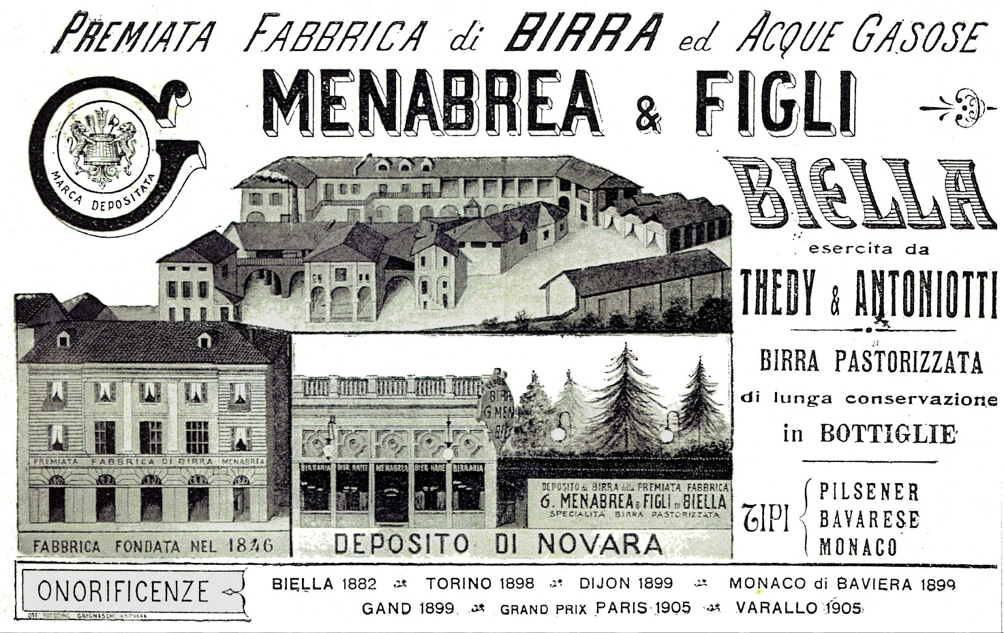
At Biella, on the other hand, it was Menabrea that produced from 1846 onwards, in what is currently called Casa Menabrea, which is still the oldest active brewery in Italy.
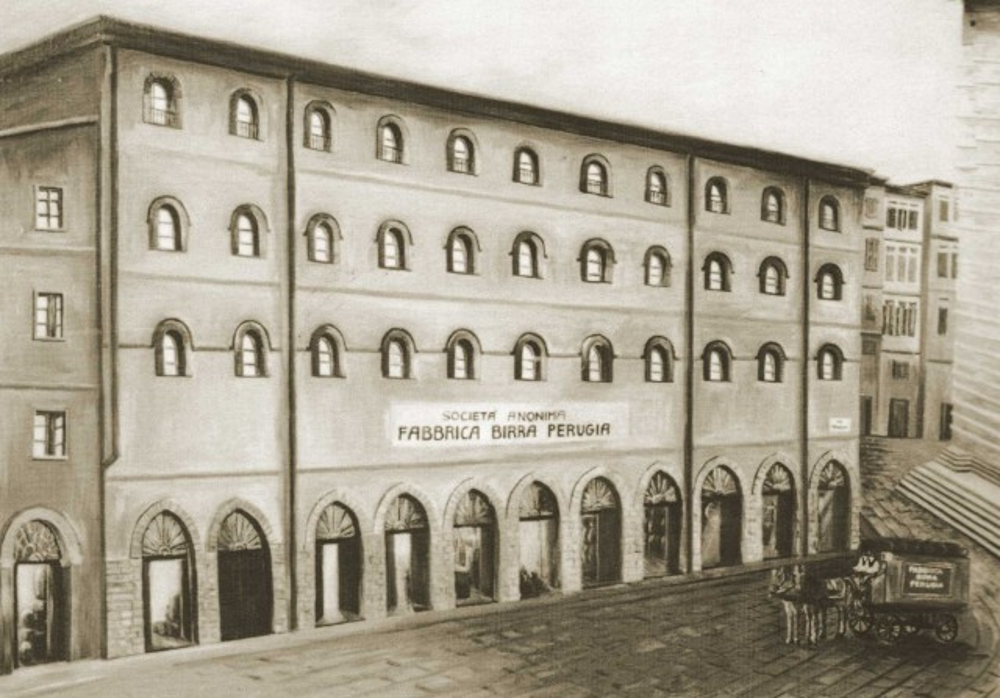
And in the regions of central Italy, the experience of the Perugia Beer was important, a beer which was already produced in the Umbrian city around 1875.
About Us

Alta Birra Italiana wants to be a portal of diffusion of the Italian beer culture, alternating contents about the history of the beer in Italy with actuality and evolution of the Italian beer movement.
Wow because this is great work! Congrats and keep it up.